
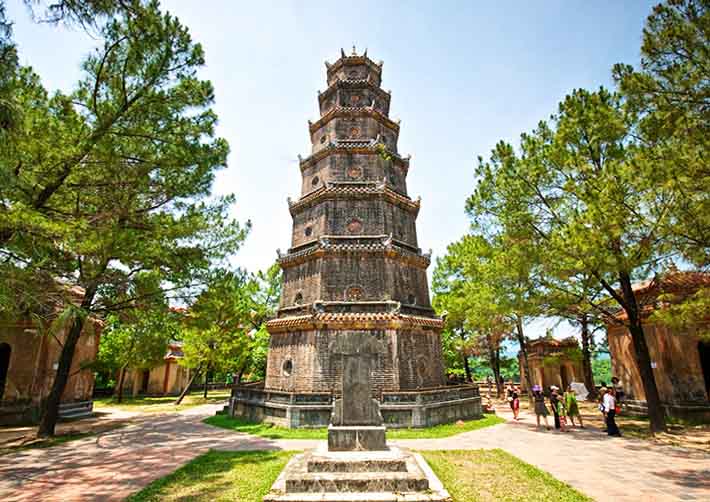
Thien Mu Pagoda, Hue, Vietnam is more than just a famous landmark, it is a place where history, spirituality, and the timeless beauty of Hue come together along the peaceful Perfume River. Whether you’re visiting Hue for the first time or returning to explore it from a different perspective, Thien Mu Pagoda offers moments of tranquility that stay with you long after your trip ends. At Dacotours, we believe the best experiences come from understanding the stories behind the places you visit, and our local experts are here to help you discover everything that makes Thien Mu Pagoda truly special in the guide below.
Why Thien Mu Pagoda Is a Must-Visit in Hue
While Hue is famous for its royal tombs, ancient citadel, and rich cuisine, Thien Mu Pagoda offers something different, a chance to experience the spiritual side of the city while enjoying one of its most beautiful riverside settings.
The Legend Behind Thien Mu Pagoda
Every great landmark has a story, and Thien Mu Pagoda is no exception. According to local legend, villagers living near the hill often saw an elderly woman dressed in red appear at night. She predicted that a powerful lord would one day build a pagoda on the site to bring prosperity to the region. After hearing the story, Nguyen Hoang, the first Nguyen Lord of southern Vietnam, ordered the construction of a pagoda there in 1601.
The mysterious woman became known as “Thien Mu”, meaning “Celestial Lady”. and the pagoda eventually inherited her name. Whether you believe the legend or not, it remains an important part of local culture and adds a sense of mystery to the site that visitors still enjoy today.
A Symbol of Hue Through the Centuries
Over more than four hundred years, Thien Mu Pagoda has witnessed many of the most important chapters in Hue’s history. Successive Nguyen Lords and emperors expanded and restored the complex, transforming it into one of the most significant Buddhist centers in Central Vietnam.
Unlike many historical attractions that function mainly as museums today, Thien Mu Pagoda remains an active place of worship. You may see local residents lighting incense, monks going about their daily routines, or visitors quietly offering prayers. This living spiritual atmosphere is one of the reasons the pagoda feels authentic rather than simply historic. For many Vietnamese people, a visit to Hue does not feel complete without stopping at Thien Mu Pagoda. It is not only a cultural landmark but also a place that reflects the city’s identity, values, and traditions.
Architectural Highlights You Shouldn’t Miss
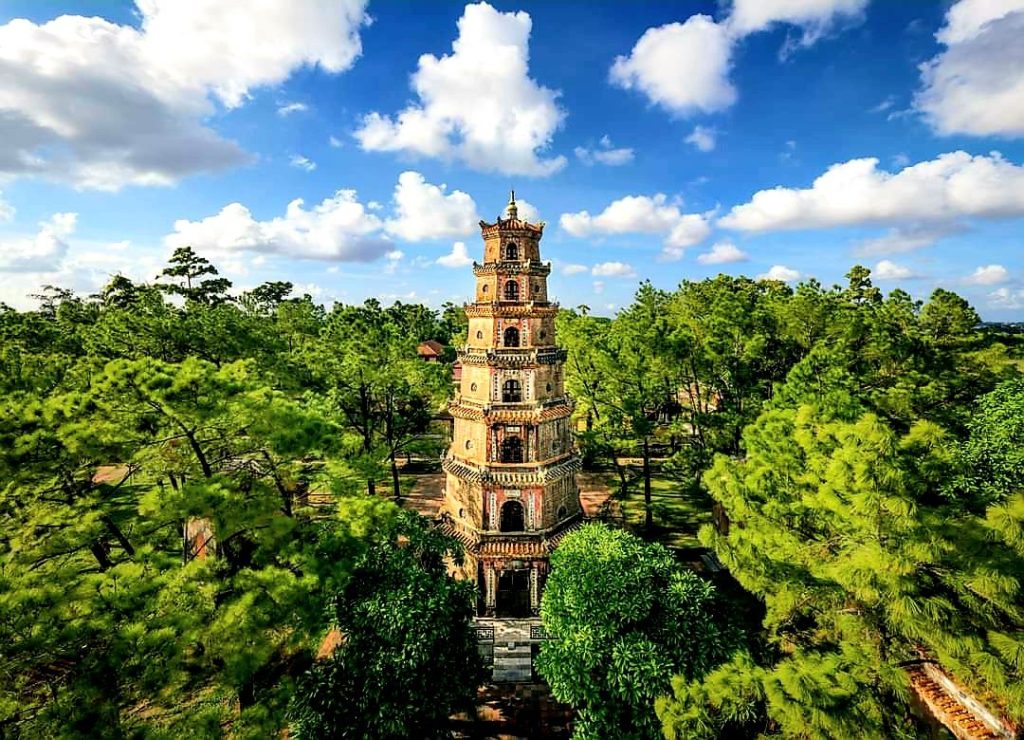
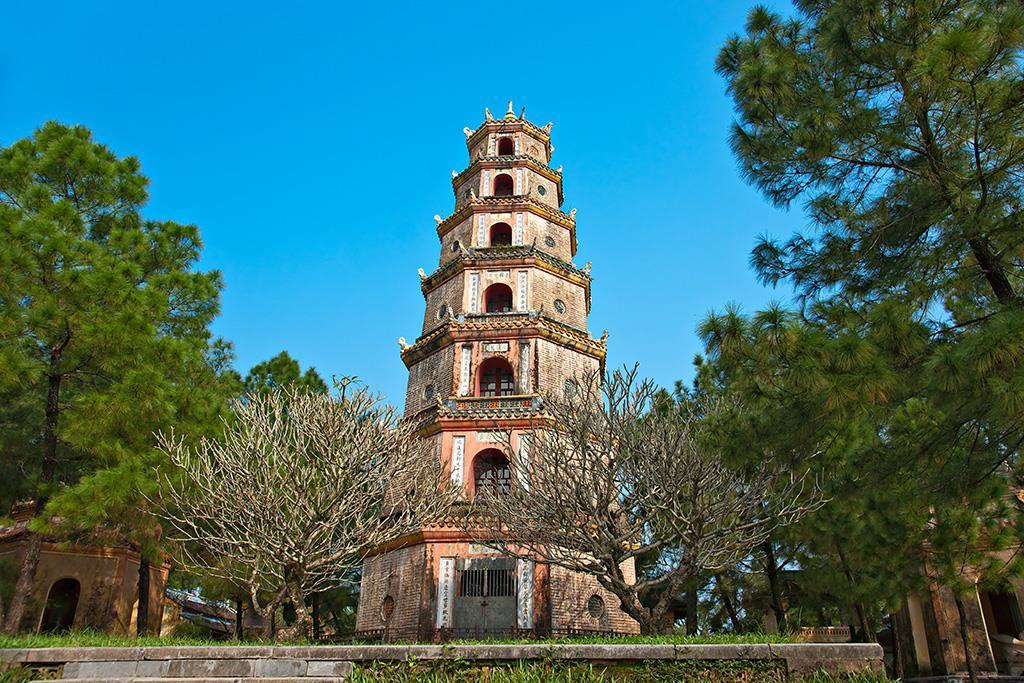
The most iconic feature of the complex is undoubtedly the Phuoc Duyen Tower, the seven-story octagonal structure standing at the entrance. Built in 1844 during the reign of Emperor Thieu Tri, the tower has become one of the most photographed landmarks in Hue.
As you walk further into the grounds, you’ll discover several notable structures and sacred spaces:
- Phuoc Duyen Tower – the symbol of Thien Mu Pagoda and one of Hue’s most recognizable landmarks.
- Dai Hung Hall – the main worship hall featuring impressive Buddhist statues and traditional architectural details.
- The Great Bell – a massive bronze bell cast in the early 18th century and regarded as one of Vietnam’s most remarkable historic bells.
- Peaceful Gardens and Courtyards – shaded pathways lined with bonsai trees, flowers, and quiet corners perfect for reflection.
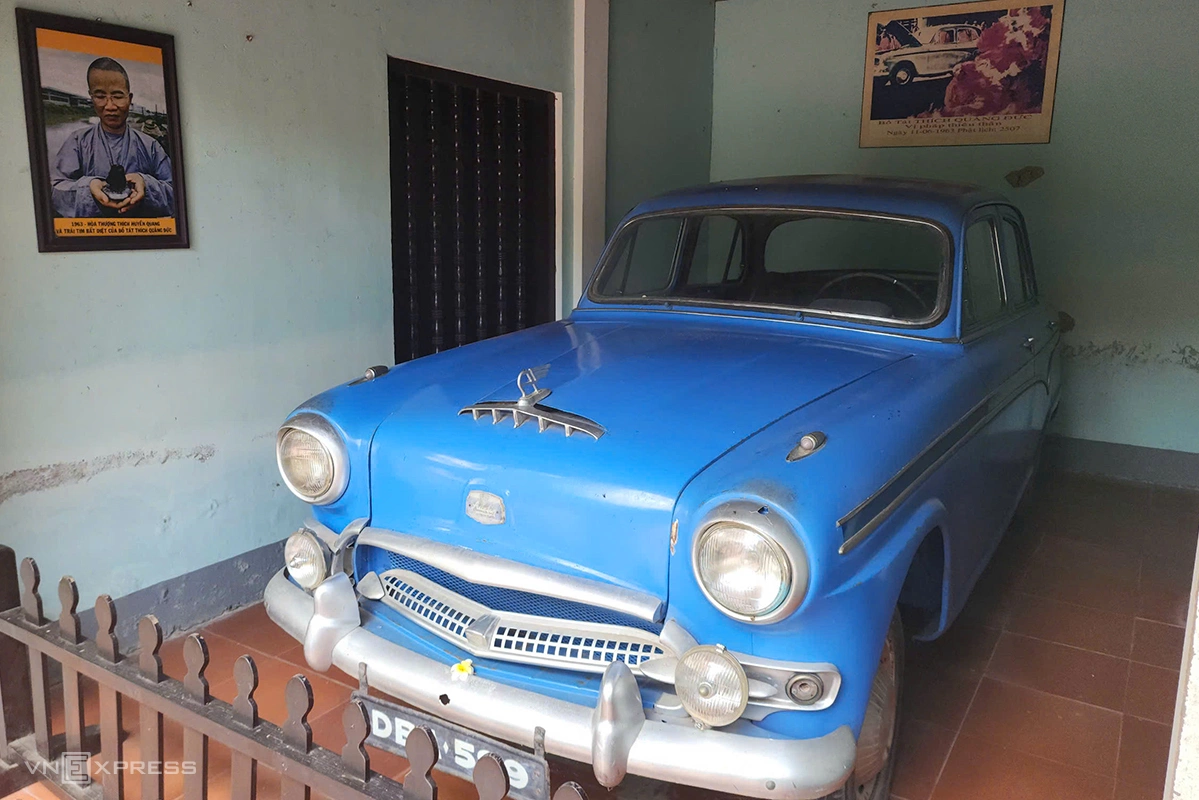
- Historic Relics – including the famous Austin car associated with Buddhist monk Thich Quang Duc, whose act of self-sacrifice in 1963 became a powerful symbol of religious freedom.
One of the things we often tell our guests is not to rush through the complex. While many visitors stop briefly for photos of the tower, the true charm of Thien Mu Pagoda reveals itself when you take time to wander through the gardens, observe the details of the architecture, and simply enjoy the peaceful atmosphere.
All You Need to Know Before Visiting Thien Mu Pagoda
One of the best things about visiting Thien Mu Pagoda is that it is easy to reach, free to enter, and beautiful throughout the year. However, choosing the right time to visit can make a huge difference to your experience. Before we dive into transportation options, here are the essential details every traveler should know:
Quick Visitor Information
| Information | Details |
| Location | Kim Long Ward, Hue City, Vietnam |
| Distance from Hue City Center | Approximately 5 km |
| Opening Hours | Daily from 7:00 AM to 5:30 PM |
| Entrance Fee | Free of charge |
| Recommended Visit Duration | 1–2 hours |
| Dress Code | Modest clothing covering shoulders & knees |
| Photography | Allowed in outdoor areas; be respectful inside worship spaces |
As of 2026, there is no entrance fee to visit Thien Mu Pagoda, making it one of the most rewarding cultural attractions in Hue for budget-conscious travelers. Visitors are welcome to make a voluntary donation to support the maintenance of the temple, but it is not required.
The Best Time of Day to Visit
If you ask us when we enjoy Thien Mu Pagoda the most, the answer is simple: early in the morning. Between 8:00 AM and 10:00 AM, the air is cooler, the sunlight is softer, and the pagoda feels remarkably peaceful. You’ll have a better chance of hearing birdsong, temple bells, and the gentle sounds of the Perfume River before larger tour groups begin arriving.
Late afternoon is another excellent option. From around 4:00 PM to 6:00 PM, the warm golden light creates beautiful photo opportunities, especially when looking across the river toward the surrounding landscape. The atmosphere also tends to become quieter as many day-trippers begin leaving the area.
We generally recommend avoiding the middle of the day, particularly between 11:00 AM and 2:00 PM, when Hue’s tropical heat can make sightseeing less comfortable.
The Best Season to Visit
Thanks to its riverside setting, Thien Mu Pagoda remains attractive year-round, but some seasons offer more comfortable conditions. February to April is often considered the ideal period for visiting Hue. During these months, temperatures are pleasant, not too sunny, rainfall is relatively low, and the gardens around the pagoda are particularly beautiful.
If you’re visiting during the rainy season from October to December, don’t worry. While occasional showers are common, the misty atmosphere can make the pagoda feel even more mystical and photogenic. Just remember to bring an umbrella and wear shoes with good grip, as pathways may become slippery.
How to Get to Thien Mu Pagoda from Hue City Center
Since the pagoda is located only about 5 kilometers from central Hue, reaching it is straightforward.
- By Taxi or Ride-Hailing App like Grab, Xanh SM,..
- By Motorbike: Renting a motorbike gives you flexibility and allows you to combine the pagoda with nearby attractions such as the Imperial City and royal tombs.
- By Bicycle: For travelers who enjoy a slower pace, cycling to the pagoda can be surprisingly enjoyable.
- By Dragon Boat on the Perfume River. This is our favorite recommendation for visitors seeking a more memorable experience. Arriving by dragon boat allows you to see the pagoda gradually appear above the riverbank. The journey itself becomes part of the attraction, offering beautiful views of daily life along the Perfume River. While it takes longer than traveling by road, many visitors find it to be one of the highlights of their time in Hue.
Visiting Thien Mu Pagoda from Da Nang
If you’re staying in Da Nang, visiting Thien Mu Pagoda as part of a day trip to Hue is absolutely possible, and highly recommended. The journey between Da Nang & Hue takes approximately 2.5 to 3 hours, depending on the route and stops along the way. Most travelers combine the pagoda with other major attractions such as:
- Hue Imperial City
- Khai Dinh Tomb
- Tu Duc Tomb
- Dong Ba Market
- Perfume River
As a trusted Da Nang tour operator specializing in authentic Central Vietnam experiences, we at Dacotours often recommend taking the scenic route via Hai Van Pass, one of the most spectacular coastal mountain roads in Southeast Asia. The breathtaking views of mountains, sea, and fishing villages turn the journey into an experience of its own rather than simply transportation.
For travelers looking for something even more unique, we’ll share our favorite way to experience Hue, including our exclusive Unique Hue City Tour from Da Nang by Train via Hai Van Pass.
Important Etiquette and Dress Code Tips
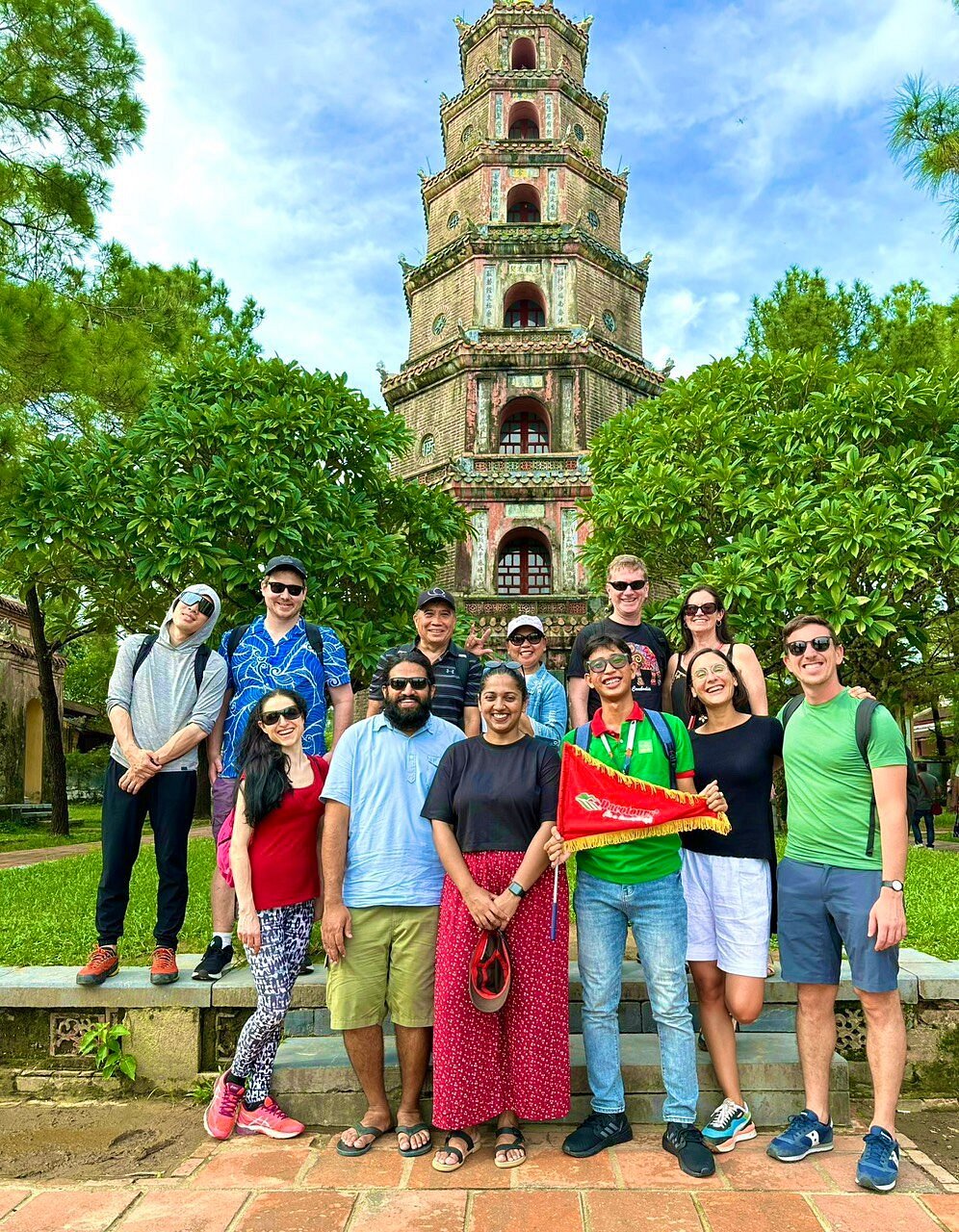
Because Thien Mu Pagoda remains an active place of worship, respecting local customs will help ensure a meaningful visit for both you and the local community. Before entering the pagoda, we recommend keeping these simple guidelines in mind:
- Wear clothing that covers your shoulders and knees.
- Avoid speaking loudly inside prayer halls.
- Remove hats when entering sacred areas.
- Ask for permission before photographing monks.
- Do not touch religious statues or offerings.
- Be mindful of worshippers who may be praying.
One thing we often tell our guests is that Thien Mu Pagoda is not just a sightseeing attraction, it’s a living spiritual space. A respectful attitude will help you appreciate its atmosphere far more than rushing through for a few photos.
All Best Things to Do at Thien Mu Pagoda
To help you make the most of your visit, here are the experiences we believe shouldn’t be missed.
Admire the Iconic Phuoc Duyen Tower
The first thing you’ll notice when arriving here is the striking Phuoc Duyen Tower, the seven-story octagonal structure that has become one of the most recognizable symbols of Hue. What makes the tower particularly impressive is its location. it overlooks the tranquil Perfume River and stands gracefully at the front of the pagoda complex.
Built in 1844 during the reign of Emperor Thieu Tri, the tower stands approximately 21 meters (69 feet) tall and was originally known as Tu Nhan Tower before being renamed Phuoc Duyen Tower. Each of its seven levels is dedicated to a different manifestation of the Buddha, reflecting the deep Buddhist symbolism woven into the pagoda’s design.
Our local tips: Don’t stop at taking a quick photo from directly in front of the tower. Walk a little farther toward the riverside terrace and look back at the structure from different angles. You’ll often find fewer people there, and the combination of the tower, gardens, and river scenery creates far more interesting photographs.
Explore the Peaceful Temple Grounds
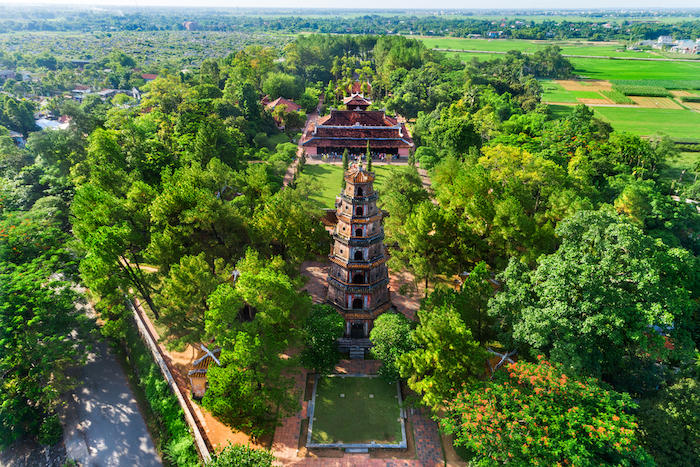
As you wander through the grounds, you’ll find ancient pine trees, beautifully maintained bonsai gardens, quiet courtyards, and traditional temple buildings that reflect centuries of Buddhist heritage. At the heart of the complex stands Dai Hung Hall, the main worship hall where monks and local devotees gather for daily prayers and important ceremonies.
Beyond the architecture, the setting itself is part of the experience. Instead of rushing from one photo spot to another, take a moment to appreciate the scent of incense, the sound of birds, and the slower rhythm of life that makes Thien Mu Pagoda feel so special.
Local insider tips: Visit early in the morning if possible. You’ll enjoy cooler temperatures, fewer crowds, and may even see monks quietly tending the gardens or preparing for the day’s activities.
Visit the Historic Austin Car of Thich Quang Duc
One of the most unexpected exhibits at Thien Mu Pagoda is an old Austin Westminster car, carefully preserved within the temple grounds. At first glance, it may seem like an ordinary vintage vehicle, but it is actually connected to one of the most significant moments in modern Vietnamese history.
The car carried Venerable Thich Quang Duc from a pagoda in Saigon to the location where he made his historic act of self-immolation in 1963 to protest religious persecution. The event drew international attention and became a powerful symbol of the struggle for religious freedom in Vietnam. Today, the vehicle serves as a reminder that Thien Mu Pagoda is not only a place of spiritual practice but also a witness to important chapters of the country’s history.
Local insider tips: Take a few minutes to read the information displayed near the car rather than simply taking a photo. Understanding its historical significance adds a deeper layer to your visit and offers a unique perspective on the role Buddhism has played in Vietnam’s modern history.
Listen to the Stories Behind the Great Bell
Another highlight worth seeing at Thien Mu Pagoda is the Great Bell (Dai Hong Chung), one of the most treasured artifacts in the complex. Cast in 1710 during the reign of Lord Nguyen Phuc Chu, the bronze bell weighs more than two tons and has been an important symbol of Hue’s Buddhist heritage for over three centuries.
In Vietnamese Buddhism, a temple bell is more than a timekeeper. Its sound is believed to inspire mindfulness, compassion, and inner peace. For generations, the bell’s echoes have carried across the Perfume River, becoming a familiar part of life for local communities. Take a closer look at the intricate decorations and inscriptions engraved on its surface, which reflect the artistry and spiritual traditions of the time.
Capture the Best Photos Around the Pagoda
With its historic architecture, peaceful gardens, and stunning riverside setting, Thien Mu Pagoda is one of the most photogenic landmarks in Hue. For the best lighting, we recommend visiting in the early morning or late afternoon when the sunlight is softer and the crowds are smaller.
The most popular viewpoint is directly in front of the Phuoc Duyen Tower, where you can capture the pagoda’s iconic symbol in all its glory. For a different perspective, head toward the riverside areas to photograph the tower with the Perfume River in the background. The gardens and shaded walkways also offer charming photo opportunities that showcase the quieter side of the pagoda.

Local insider tip: Instead of focusing only on the famous tower, look for smaller details such as incense coils, temple gates, bonsai trees, and traditional architectural elements.
Experience the Soul of Hue with Dacotours
While Thien Mu Pagoda is one of Hue’s most iconic landmarks, it is only one part of the city’s rich cultural heritage. To truly appreciate Hue, we recommend combining your visit with other highlights such as the Imperial City, royal tombs, traditional cuisine, and the scenic Perfume River.
As a trusted Da Nang tour operator organizing Central Vietnam local tours, we believe the best travel experiences come from understanding the stories behind each destination, not just checking attractions off a list.
Whether you’re in Hue, Da Nang, Hoi An,.. our Full Day Hue City Tour via Hai Van Pass is a great way to explore Hue’s most famous sites while enjoying one of Vietnam’s most spectacular coastal routes.
For travelers who prefer a more flexible itinerary, our Hue Private Tour allows you to discover Hue at your own pace with a schedule tailored to your interests.
Looking for something truly different? Our Unique Hue City Tour from Da Nang by Train via Hai Van Pass, available exclusively at Dacotours, combines one of Vietnam’s most scenic train journeys with a deeper exploration of Hue’s cultural treasures. It’s a memorable alternative to the typical day-trip experience and a unique way to discover Central Vietnam.
Whichever option you choose, we’ll help you experience Hue beyond the guidebooks & create a journey that’s both meaningful and memorable. Reach out to us 24/7 to design your ideal Vietnam adventure:
- No.1 of Tours in Da Nang + Traveler’s Choice 2026 in Tripadvisors: https://www.tripadvisor.co.uk/Attraction_Review-g298085-d6974493-Reviews-Dacotours-Da_Nang.html
- Top Rated Tours in GetYourGuide: https://www.getyourguide.com/s/?q=supplier:275500
- Best-seller for Da Nang Tours in Viator: https://www.viator.com/Da-Nang/d4680-ttd
- 5-Star Reviews on Google Maps: https://maps.app.goo.gl/AmCen5fcjfVnv4fGA
- Loved by Travel Vloggers: https://www.youtube.com/watch?v=M98prYw2MzM
- 100% Recommended in Fanpage: https://www.facebook.com/dacotoursjsc/reviews
Follow us on Instagram for more tips, hidden gems & updates everything about Da Nang, so every visit becomes a memorable, local experience.